Quick take
How UK festival ownership became a two-tier market
For most of the 1990s and 2000s, the UK festival market was dominated by independent operators: events started by music fans, farmers who licensed their fields, or small promoters who built a loyal local crowd over years. That changed meaningfully after 2010, when the two US-based live-entertainment giants, Live Nation and AEG, accelerated their UK acquisitions. A third tier emerged in the mid-2010s with private-equity-backed aggregators, most notably Superstruct Entertainment, which assembled a portfolio of mid-tier independents.
The current picture is a three-way split. At the top end, corporate portfolios control most of the UK's highest-capacity events. In the middle, Superstruct and similar operators run events that still feel independent but are backed by institutional capital. And at the base, a genuinely independent sector survives, increasingly fragile, accounting for most of the festival closures recorded by the Association of Independent Festivals since 2019.
Live Nation's UK portfolio
Live Nation is the world's largest live-entertainment company. In the UK its festival arm operates through Festival Republic, run by Melvin Benn, which controls a significant share of the major brand names. Events in the Festival Republic / Live Nation orbit include Download Festival (Donington, East Midlands), Reading and Leeds (the twin-site August bank holiday weekender), Creamfields (Cheshire, the UK's largest dedicated electronic festival), Latitude Festival (Suffolk), Wireless Festival (London, hip-hop and R&B) and Isle of Wight Festival.
The practical consequences for attendees: ticket prices, bar tariffs and artist fees at Live Nation events are set within a corporate commercial framework. These events rarely take booking risks on emerging or underground acts for main stages, though they can spend more on production and infrastructure than most independents.
AEG Presents in the UK
AEG Presents, Live Nation's main global rival, has a smaller but significant UK festival footprint. BST Hyde Park (London, July) and All Points East (London, Victoria Park, August) are the two flagship UK summer festival products. Both are urban park events rather than camping weekenders, and both sell at premium ticket prices relative to comparable camping events.
AEG's UK operations are also tied to their venue business (they own or manage several major UK arenas), which gives them artist relationships and booking leverage across the touring and festival circuit.
Superstruct Entertainment and the PE tier
Superstruct Entertainment was founded in 2017 and backed by Providence Equity Partners. It has assembled a portfolio of mid-tier festival brands across the UK and Europe, acquiring events that were independently run but whose founders wanted liquidity or operational support. UK events in the Superstruct portfolio include Boardmasters (Cornwall), Victorious Festival (Portsmouth), Y Not Festival (Derbyshire), End of the Road (Wiltshire), Neighbourhood Weekender (Warrington) and Slam Dunk Festival.
Superstruct events tend to retain more of their independent character in programming and community than direct Live Nation events, because the Superstruct model leans on existing brand equity rather than a homogenised house style. But they are ultimately accountable to institutional investors, which constrains how much financial risk they can take on lineup or infrastructure.
The genuinely independent tier
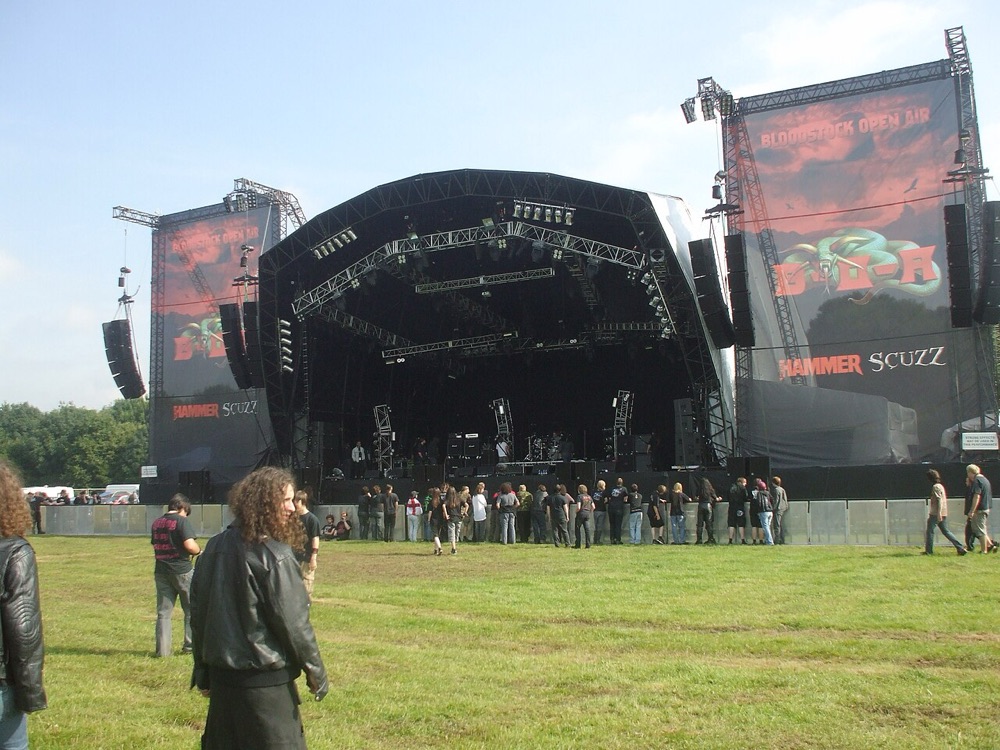
A significant number of the UK's best-regarded events remain independently owned. Glastonbury is operated by Glastonbury Festivals Ltd, the Eavis family company, and has consistently refused corporate acquisition conversations. Green Man (Wales), Shambala (Northamptonshire), Boomtown (Hampshire), Bloodstock (Derbyshire), We Out Here (Cambridgeshire), WOMAD and Houghton are all independently run at the time of writing.
Independent festivals bear the most risk in a difficult market, and the AIF's data on closures shows this clearly. But they also tend to produce the most distinctive programming, the most cohesive community feel, and the strongest word-of-mouth loyalty. The relationship between independent ownership and quality is not automatic, but the correlation is strong enough that ownership status is worth checking before you book.
Note on sourcing: ownership structures change. Acquisitions are not always publicly announced at the time they happen. Where we have marked a festival as independent, that is based on publicly available information at the time of writing, not a guarantee of permanent independence. If you notice a change, reach out via the contact page.
Where to look next
These are the strongest internal matches for this guide topic right now.
Keep exploring
FAQ
Does Live Nation own Glastonbury?
No. Glastonbury Festival is operated by Glastonbury Festivals Ltd, a private company controlled by the Eavis family (Michael and Emily Eavis). It has no corporate-entertainment parent and is consistently cited as one of the few truly independent large-scale UK festivals.
Which UK festivals does Live Nation own?
Live Nation's UK festival portfolio includes Download Festival, Reading and Leeds, Creamfields, Latitude, Wireless and Isle of Wight Festival, among others. The full Live Nation global portfolio is much larger; the UK arm operates through its subsidiary Festival Republic for most UK events.
Does it matter whether a festival is independent or corporate?
It shapes several things that matter to attendees: programming risk appetite (independents often take bigger chances on emerging acts), bar and food pricing (corporate events typically run tightly controlled on-site supplier lists), profits and reinvestment, and the festival's relationship with its local community. Independents are also proportionally more vulnerable to closure: they lack the cross-portfolio risk-spreading that corporate operators can use to absorb a bad year.
What is Superstruct Entertainment?
Superstruct Entertainment is a private-equity-backed festival operator that has assembled a portfolio of mid-tier independent UK and European festivals. UK events in their portfolio include Boardmasters, Victorious, Y Not Festival, End of the Road, Neighbourhood Weekender and Slam Dunk, among others.